

Articles about education, skills and the creative and cultural industries.
After The Crunch: Revisited
by Shelagh Wright, John Kieffer, John Holden, John Newbigin, April 2013
'After the Crunch' - a collection of short essays by artists, entrepreneurs, analysts, policy-makers, academics and financiers from across the creative and cultural sector - was published by the British Council and Creative & Cultural Skills in 2009. Over forty commentators were asked to present their thoughts on the future of...
Towards A More Creative And Green Economy
by Edna dos Santos-Duisenberg, May 2013
The last five years have marked a turning point in the world economy, bringing about decisive shifts in global wealth and the structure of the international governance. Today the G-8 can no longer ignore the G-20 in the conduct of the international economic and development agenda, as emerging countries are...
Created in China
by Philip Dodd & John Howkins, April 2013
John Howkins: China is the only part of the globe that is big enough and strong enough to go its own way outside the ambit of Europe and America. It's the only viable alternative we have - a different way of doing things. Philip Dodd: There's much talk within China...
Fair Ecology, Fair Use
by John Howkins, April 2013
In 2009, we had no idea what a new, post-crunch British economy would look like. What we did know was that whatever shape a new economy took, it would depend increasingly on creativity. At the time, there was very little public recognition of this fact, prompting us to invite over...
Five Commandments (we can’t afford ten, anymore)
by Philip Dodd, April 2013
In 2009, we had no idea what a new, post-crunch British economy would look like. What we did know was that whatever shape a new economy took, it would depend increasingly on creativity. At the time, there was very little public recognition of this fact, prompting us to invite over...
The Creative Economy: Beyond Economics
by Edna dos Santos-Duisenberg, May 2013
In 2009, we had no idea what a new, post-crunch British economy would look like. What we did know was that whatever shape a new economy took, it would depend increasingly on creativity. At the time, there was very little public recognition of this fact, prompting us to invite over...
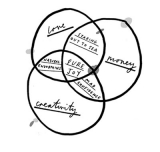
Creativity Money Love - Introduction
by Shelagh Wright, John Kieffer, John Holden, John Newbigin, November 2011
The revolution is being televised: every day in the news we see radical changes being enacted around the world. It is also being digitised, and people are finding new ways of doing things for themselves. Two areas where change is happening at a frenetic pace are in the education system...
Tomorrow’s world today
by Paul Jackson, November 2011
Excellence and enjoyment, skills based curricular, knowledge based curricular, enquiry based learning ...everyone has their opinion as to what we should be teaching today's children. But many forget that today's children will not be adults in today's world, they will be adults in 'tomorrow's world', a different place, with a...
One Solo
by Malcolm Gillies, November 2011
What are you? “You are what you eat”. So I learnt in biology. But the world is getting fat. And running out of food. What are you? “You are what you think”, the philosopher smugly opines. Can I ever know what you really think? In fact, do you know...
Connecting learners with museums - what are we waiting for?
by Anra Kennedy, November 2011
Museum worksheets have a lot to answer for. ‘Can you spot the cat on the far wall? How many places are set at the table?’ When I was a child worksheets in museums were relatively new, a valiant effort to reach out to younger visitors. Trouble is, they turned visits...
The seeds of hope
by Phil Sheperd, November 2011
The seeds of hope can best be seen at a local level, in the countless examples of grass roots initiatives, where people come together – not just to compensate for the failings of government – but to affect real change.
Piloting chaos with integrity and inspiration
by Uffe Elbæk, November 2011
What did you and your colleagues want to achieve with this education? We have often considered the KaosPilots as a positive answer to youth unemployment but, to many, it has meant more than that: influenced human potential, moved boundaries etc. The KaosPilots was our vision of a fantasy education, one...
Creativity and education
by Trevor Phillips, November 2011
There are only two things that matter in the 21st century world: one is whether we can live with our planet; the other is whether we can live with each other. On a planet that could one day be home to up to nine billion people, there’s plenty of space...
It’s not just about the money
by Sir John Tusa, November 2011
Over the course of successive governments, education in the UK has been debated in terms which, deliberately or not, have reduced it to the realm of the economic and functional. Why should you do well at school? To win a place at a good university. And why should you go...
Not from the sidelines
by Shonagh Manson, November 2011
This argument is by no means one you haven’t heard before, but I’m going to make it again. It is one that is vital not only to ensure the thriving nature and fitness of our creative and cultural industries, but for our broader culture and society to develop and to...
Creativity Money Love
by Shelagh Wright, John Kieffer, John Holden, John Newbigin, November 2011
In his recent MacTaggart lecture the CEO of Google, Eric Schmidt, spoke of the energy and inventiveness of Victorian Britain as ‘… a time when the same people wrote poetry and built bridges’. Most of us want that kind of richness and diversity to run through our communities. We all...
Freedom, fire and facts
by Sally Bacon, November 2011
W. B. Yeats’s quote about education is well known: ‘Education is not the filling of a bucket, but the lighting of a fire.’ Richard Layard, in his landmark 2009 report for The Children’s Society, A Good Childhood, turns to Yeats when he writes that schools ‘should expand the powers of...
LOVE – a curriculum on human rights and education for peace
by Puneeta Roy, November 2011
Article 26.2 of the Universal Declaration of Human Rights states the role of educators in achieving the social order called for by the declaration: ‘Education shall be directed to the full development of the human personality and to the strengthening of respect for human rights and fundamental freedoms. It shall...

Another way in
by Pauline Tambling, November 2011
I don’t think many people in the cultural sector expected the newly-formed Creative & Cultural Skills to make apprenticeships a key skills priority in 2006. Employers weren’t crying out for them; most said that they’d like to have apprenticeships for graduates rather than engage with younger people. However, as we...
One size fits all, fits nobody
by Paul Latham, November 2011
How do you see the education and skills sector in relation to the creative industries as a whole but also your business? One of the problems with the music business is that we’re seen as a ‘sexy’ business and we’ve never been short of people wanting to work with us....